
How much iron supplement should I take?

Why We Need More Iron
Iron is denoted by the symbol Fe. Iron is an essential mineral. It occurs widely in nature. Its chemical and biological roles are very important. It is an important component of food. It is present in hemoglobin and helps in oxygen transportation.
Without the presence of iron, the red blood cells cannot transport enough oxygen. It is an essential component of myoglobin which is an important muscle protein and helps in oxygen storage. Iron is responsible for the red colour of muscles. In the body, Fe is stored as ferritin and is transported throughout the body by transferrin. Biological catalysts also contain iron in them. It is stored in the spleen, liver, muscle tissues, and bone marrow.
Is iron essential for the human body?
Of course, it is, as many important biological processes are dependent on iron. Iron plays a role in a range of metabolic activities, such as oxygen transfer, deoxyribonucleic acid (DNA) synthesis, and electron transport [1]. Iron importance for human health has been studied by researchers since ancient times. Egyptians, Hindus, Greeks, and Romans used iron for medicinal purposes [2].
Iron supplementation
Ferrous iron salts are recommended for oral iron supplementation due to their good bioavailability and cost-effectiveness [3]. When iron supplements are taken on an empty stomach, absorption is improved. Higher iron doses (typically 60 mg Fe/day) may cause nausea and epigastric pain [4]. Smaller doses between meals should be tried for such adverse effects. Iron can also be given with meals, as food inhibits about two-thirds of medicinal iron absorption [3].
Women often have low iron levels when they become pregnant, therefore in developing nations, iron supplementation in pregnancy is recommended. Iron supplements should be taken after consulting a doctor. Side effects can also occur if proper supplementation is not done. The common effects which occur due to iron supplement misuse are dark stools, nausea, vomiting, diarrhoeas, and constipation.
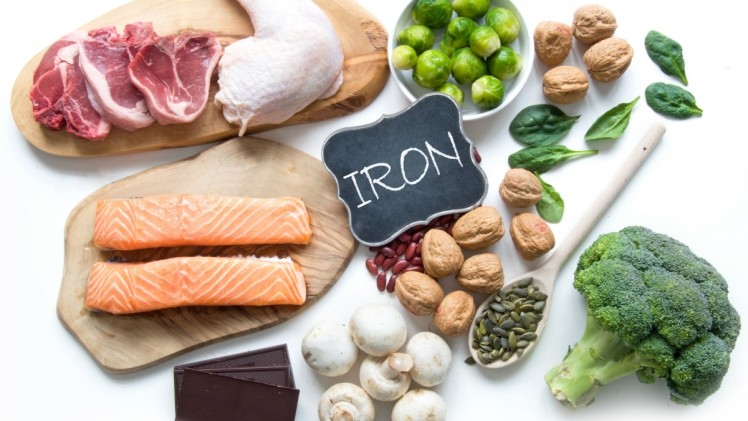
From where I can get iron?
Iron required for the body is classified into two categories:
- Heme iron [3]
- Non-heme iron [3]
There is a variety of foods available which are rich in iron content. Heme iron is obtained from meat, fish, and poultry. Non-heme is obtained from legumes, leafy vegetables, dry fruits, and oats. Iron supplements are also available in the market to overcome the iron deficiency issues such as ferric citrate, ferric sulphate, ferrous gluconate, and ferrous sulphate.
How much Iron is needed by the body daily?
The amount of iron needed by the body may vary according to age and sex. Studies have shown that in children up to the age of 11 years about 0.96-1.17 mg of iron is required for healthy living activities.
From 12 to 16 years of age for boys and girls, 1.82 and 2.02 mg per day are needed respectively. Pregnant, lactating, and menstruating women require 1.14, 1.31, and 2.38 mg iron daily [3]. About 1- 3 g of iron must be stored daily by an average human adult. This can be maintained by a fine diet [5]. The men require about 8.7 mg Fe/day.
What happens if I don’t get enough iron?
Iron deficiency occurs and it may lead to different diseases. Common symptoms include fatigue, cold feet and hands, weakness, pale skin, and brittle nails. Deficiency occurs due to the intake of food which does not contain enough iron. Initially, a decrease in stored iron occurs, and if less intake continues a decrease in RBCs occurs and then it leads to anemia.

Anemia
The most common and severe disease that occurs due to less iron intake is anemia. It is a condition in which the amount of red blood cells (RBCs) in the blood is low and hemoglobin in the blood cells is lower than normal.
A person suffering from anemia is called an anemic [3]. It affects people of all ages and can occur at a stage. It is characterized by extreme fatigue and headaches. About 4-5 million Americans are affected by anemia per year [6]. Anemia is more of a symptom than a disease. It’s usually divided into two categories:
- Chronic anemia (anemia that occurs over a long time)
- Acute anemia (anemia that develops quickly)
Examples of anemia are sickle cell anemia, thalassemia, aplastic anemia, and hemolytic anemia [3].
Can Iron be harmful to the body?
Excess of everything. The amount of iron intake should be kept within limits in order to maintain a healthy life. Excessive quantities of free iron in the blood can result from iron overdoses.
Free ferrous iron in the blood reacts with peroxides to form extremely reactive free radicals that can harm DNA, proteins, lipids, and other biological components. When the cell’s free iron levels surpass the ability of transferrin to bind the iron, iron toxicity arises.
Damage to the gastrointestinal tract’s cells results in low iron absorption, resulting in higher blood levels.
Iron affects cells in the heart, liver, and other organs leading to life-threatening diseases [7]. Iron toxicity is difficult to treat medically, a chelating agent is required to bind and remove excess iron that is present in the body [8].
Summary
Iron is an essential supplement required by the body for healthy growth and development. Iron is required by our bodies for a variety of functions. It assists our muscles in the storage and usage of oxygen. Iron can be found in many proteins and enzymes. Iron-enriched food should be consumed on a daily basis.
Deficiency and excess of iron both can be harmful to the human body so a proper check and balance should be maintained.
Young kids and women who are pregnant or menstruating are at a higher risk of having insufficient iron. Iron deficiency anaemia can occur if you have too little iron. Loss of blood, inadequate diet, and inability to absorb enough iron from foods are all causes of low iron levels.
Iron supplements present in markets may help to overcome severe iron deficiencies. Anaemic persons should focus on the proper iron intake so that fatal conditions should be avoided.
Life is a precious gift and health is a key factor to living it so eat healthily and live healthily.
References
- Sunde, R. A. (1997). Handbook of nutritionally essential mineral elements. CRC Press.4.
- Wood, R. J., Ronnenberg, A., King, J. C., Cousins, R. J., Dunns, J. T., Burk, R. F., & Levander, O. A. (2005). Modern nutrition in health and disease. Lippincott’s Illustrated Reviews Biochemistry, Lippincott Williams & Wilkins, 248-270.
- Monsen, E. R. (1988). Iron nutrition and absorption: dietary factors which impact iron bioavailability. Journal of the American Dietetic Association, 88(7), 786-790.
- Cavalli-Sforza, T., Berger, J., Smitasiri, S., & Viteri, F. (2005). Weekly iron-folic acid supplementation of women of reproductive age: impact overview, lessons learned, expansion plans, and contributions toward achievement of the millennium development goals. Nutr Rev, 63(12 Pt 2), S152-8.
- Cook, J. D., Skikne, B. S., Lynch, S. R., & Reusser, M. E. (1986). Estimates of iron sufficiency in the US population.
- Le, C. H. H. (2016). The prevalence of anemia and moderate-severe anemia in the US population (NHANES 2003-2012). PloS one, 11(11), e0166635.
- Cheney, K., Gumbiner, C., Benson, B., & Tenenbein, M. (1995). Survival after severe iron poisoning treated with intermittent infusions of deferoxamine. Journal of Toxicology: Clinical Toxicology, 33(1), 61-66.
- Tenenbein, M. (1996). Benefits of parenteral deferoxamine for acute iron poisoning. Journal of Toxicology: Clinical Toxicology, 34(5), 485-489.