
Why We Apply Micronization Technology
When it comes to taking supplements, the basic factors that make a high quality formula are the ingredients, dosages, and the company who makes them.
Once you know your supplement jargon, and have become experienced and well-read regarding what works best for your body, it’s time to take your supplement requirements up a notch and go for higher potencies.
Our preferred method of increasing potency is through micronization. Before we explain what micronization is and its benefits for supplement formulas, let’s first have a quick review of how the industry usually tackles the problem of potency.
Higher Potency = Efficient Absorption = Better Results
Potency is when close to 100% of your formula is metabolized by the body upon ingestion. This means the moment you swallow a capsule, every single ingredient inside will start working right away, preventing your digestive juices from just wasting half the formula.
Higher potency leads to better results in the long-term, as the nutrients and other compounds in the formula are being delivered to where they need to be at a rapid rate.
There are two main ways to increase the potency of a formula: Using Premium Ingredients or Adding Bioavailability Boosters
Premium Ingredients
Many branded and premium ingredients out there are custom-made to be high bioavailable. You have the likes of Citrulline Malate fo Citrulline, CAPSIMAX for cayenee, CarnoSyn for Beta Alanine, and Alphasize for Alpha-GPC.
Other ingredients such as extracts offer standardization, where the active compound known to for the health benefits is heavily concentrated. Examples would be EGCG for green tea extract, where 40%-50% standardization is really high, and Rosavins and Salidrosides for Rhodiola Rosea, where 1%-5% is pretty good.
Adding high-purity or premium ingredients indeed help maximize potency and formula efficiency, but these often make the product too expensive if added in numbers.
Bioavailability Boosters
Two popular examples are BioPerine from black pepper, isolated for its piperine content, and AstraGin, a combination of Astralagus Root Extract and San-qi Ginseng Root Extract.
You can add ingredients or compounds that specifically boost bioavailability, but then this may also come at a cost or ruin overall formula synergy or also add to the cost.
How do you boost a supplement’s absorption and potency without making it too premium for your customers? One word: Micronization.
What is Micronization?
In the supplement world, micronization is the process of reducing the average diameter of an ingredient’s particle. Traditionally, micronization involves tight milling and grinding (friction-based), but more modern methods include supercritical fluids and solubility manipulation.
Unlike adding premium ingredients or bioavailability boosters, micronization allows you to retain the original formula and control the increase in costs if there are any.
How does it work?
The sooner the ingredient particles are digested and metabolized, the faster they are absorbed by the body. Micronization increases the surface area of the ingredient, allowing the body to “break” into the particle faster, which result in better absorption rates.
Imagine a clump of baking soda. If you try to dissolve it as it is, it will take time and maybe some elbow grease for aggressive mixing. However, breaking it into smaller pieces allows the liquid medium to dissolve it faster, allowing the baking soda particles to do what they need to do sooner.
Take that into supplement form and micronization will help you “feel” the effects of your product fast.
What Science Says About Supplement Micronization
Admittedly, not every ingredient needs to be micronized. However, there are a few ingredients out there that need the extra help, and we found some studies that support their micronization.
Ginseng
Ginseng is an ingredient used in traditional Chinese medicine for hundreds of years. Research has pointed out how it can have potent antioxidant benefits that can reduce inflammation and other properties that can support healthy brain function. Needless to say, it’s a really good wellness with nootropic potential.
The problem is, ginseng particles are difficult to absorb and would require hundreds of milligrams per dose for its claimed benefits to work. Fortunately, micronization seems to work when it comes boosting absorption.
Researchers in 2020 saw a marked improvement in absorption after micronization. More than bioavailability, micronization also helped the processing side, allowing ginseng to be encapsulated easier.
Turmeric/Curcumin
Turmeric is one of the spices in the world considered to be a “super food,” not because of its nutrient density, but due to its note-worthy anti-inflammatory properties.
Inflammation is at the root of all human diseases, so eating foods with anti-inflammatory properties can result in fewer instances of illnesses. Turmeric just happens to be one of the best ingredients for it and explains why many supplement companies have all sorts of turmeric products.
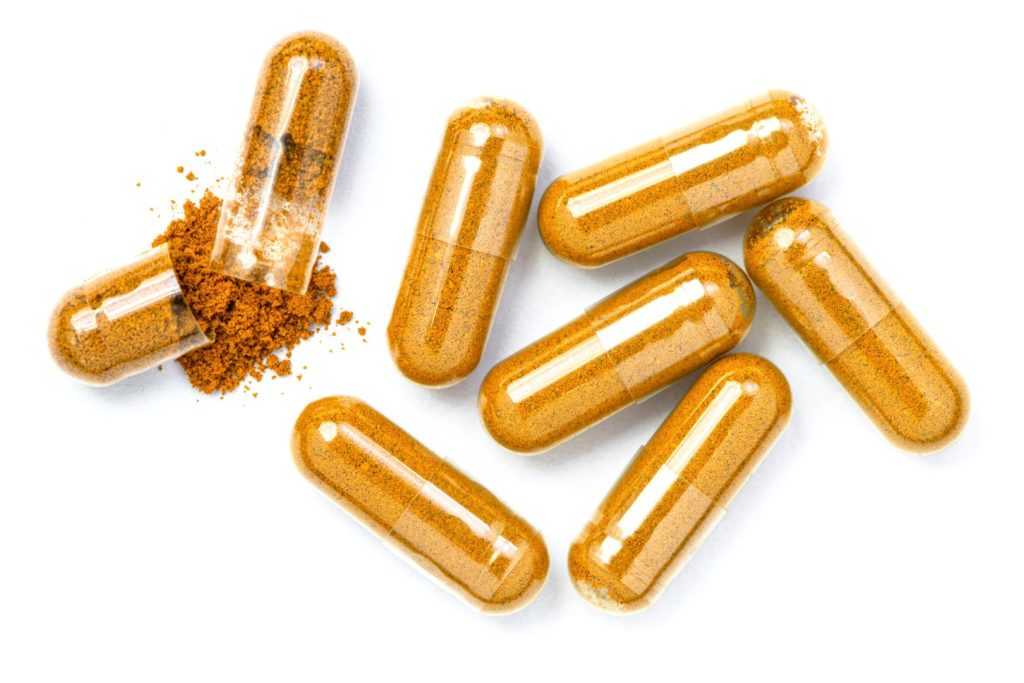
The secret lies in its curcumin content, the active compound in turmeric. Many studies allude to curcumin when it comes to its joint-health, antioxidant, eye-health, and even cardiovascular benefits.
Unfortunately, curcumin is poorly absorbed. Some research points out that the absorption is only up to 5% at most with common supplements. This would explain why most turmeric supplements are deemed not worth buying.

It’s why when we developed CurcumaPRO, we made sure we got the type of curcumin in micronized form. A 2014 study revealed that micronization actually increased curcumin bioavailability up to 14 times!
Pre-workout ingredients
Micronization isn’t just exclusive to wellness ingredients and herbals. In fact, the fitness industry has been introducing micronization in their pre-workouts for a few years now. The reason for this is simple: Pre-workouts tend to be clumpy or just hard to digest in general. This causes problems in absorption or bioavailability, which in turn forces consumers to use more per serving. Here are a few examples of pre-workout ingredients that have normalized micronization.
- Creatine: Creatine is perhaps the most popular pre-workout ingredient, right next to coffee if you count that as a pre-workout. With over 200 studies done on creatine testing its efficacy on physical performance and muscle composition, it’s no secret that creatine is definitely one of the best pre-workout ingredients you can take. However, the problem with this amazing ingredient is how it just clumps. This clumping makes it hard to digest and also causes the familiar side effect of bloating. Micronized creatine helps the user ingest creatine without the side effects.
- Arginine/Citrulline: Arginine and Citrulline are what you call pump-enhancers. Essentially, they let the body produce more nitric oxide for better lifting performance and vascularity (when your muscle veins are popped up). The problem is, these two ingredients need a lot of doses to work due to their absorption rates. This would explain why many supplements are now adding micronized citrulline or arginine in their formulas.
- BCAAs: BCAAs are amazing at building muscle, reducing muscle fatigue, and boosting muscle recovery. These three things are what bodybuilders pay hard money for. However, many lifters have trouble choosing which BCAA product to buy because unlike most pre-workouts, you want BCAAs to be absorbed as fast as possible, ideally just after you’re done working out or within 30 minutes of it. The reason is the body is in an anabolic state after a tough workout, and you want the first thing your muscles “eat” to be BCAAs. So, it goes without saying that the faster BCAAs are absorbed, the better. Hence, micronization.
Summary
The supplement industry is rife with an array of formula and ingredients all vying to take your money out of your pocket. And due to sheer quantity, you’re bound to see or even try a supplement that advertises a benefit, but doesn’t deliver and one reason could be due to poor absorption.
As the consumer, it will ultimately fall on you to choose the best one that fits your needs. If you want the best supplements, you have to keep an eye on whether the manufacturer does a little something to maximize absorption.
One of the best ways to boost ingredient absorption is micronization, especially when it comes to specific herbals and compounds that have poor absorption rates.
We believe micronization bridges the gap between quality and value, hence why whe applied micronization technology to some of our products.