
The 5 Healthy Active Compounds in Ginseng Root
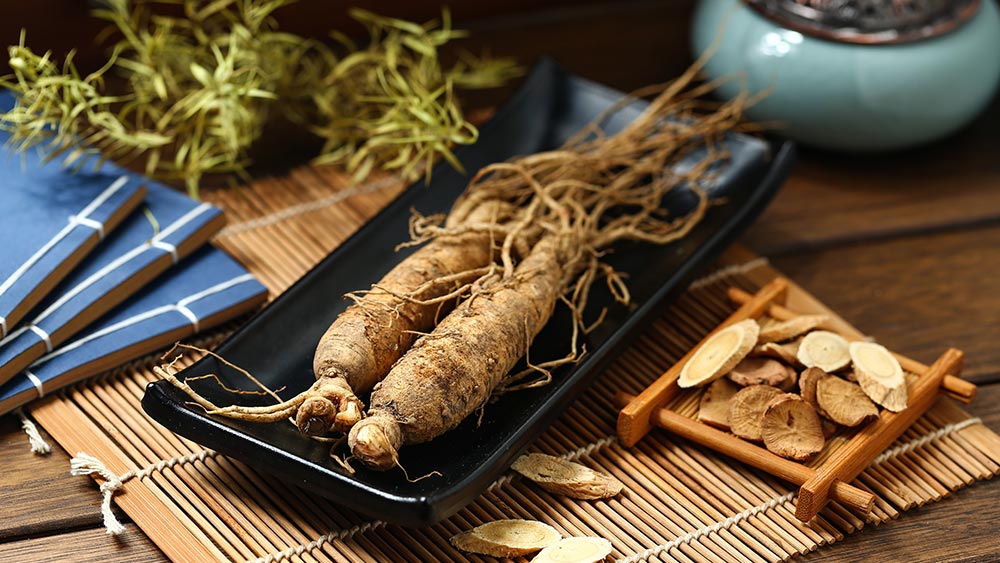
Ginseng has been an essential part of the traditional medicine practice in Asian countries for thousands of years. Thanks to its long list of health benefits, the active compounds in ginseng are widely used worldwide.
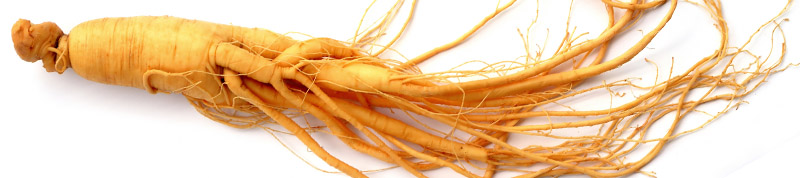
In fact, when talking about ginseng, we refer to 11 different varieties of plants with fleshy roots. The main source of ginseng is the root of various trees from the Panax family.
The extract of those plants is a natural supplement that can help enhance immunity, regulate blood sugar, and improve focus. Furthermore, it can even help in the treatment of diseases like cancer, heart disease, and Hepatitis C. [1]
Today, we’ll cover the most important active compounds found in these plants, which are responsible for their various health benefits.
What are the Active Compounds in Ginseng?
A biologically active or bioactive compound is defined as a substance that affects the biological processes beyond the nutritional value that impact our body’s function. [2]
Below, we’ll cover some of the most important bioactive compounds found in ginseng. In addition, we’ll provide a brief explanation of their effect on the human body.
1. Ginseng Saponins
Also known as ginsenosides, ginseng saponins are the primary pharmacologically active compound of ginseng root, leaf stem, and berry.
These compounds can be found in different concentrations throughout the plant. In fact, 2-3% of the root’s contents are saponins, 4.71% of the leaves, and 5.35% of the berry of the American variety. [5] Worldwide, about 40 ginsenosides have been found in Panax tree varieties.
These compounds are especially good at reducing oxidation due to their ability to counteract free radical formation in the body. [3]
Several studies have shown them to stop free radical species formation in the pulmonary and aortic endothelium [4]. Ginseng also has the power to prevent the injuries caused by these species by promoting the release of nitric oxide. [3]
The saponins extracted from the leaf stem and root showed a positive effect on learning and memory acquisition. In fact, it’s used as a remedy for mental issues like ADHD and anxiety, and ameliorated scopolamine and cycloheximide amnesia.[5] Apart from these, some studies focused on the anti-cancer, anti-hyperglycemic, and anti-obesity effects.[5]
2. Ginseng oils
Next up, we have ginseng oils. In particular, these are uniquely rich in unsaturated fatty acids. This is especially true for the red ginseng variety, for which these compounds represent 80-90% of its fatty acid composition. This is comparable to the composition of Korean ginseng oil.
Red Ginseng’s predominant unsaturated fatty acid is linoleic acid, while oleic acid is the most abundant for American and Korean ginseng seed oils. [6] The fatty acids that make up ginseng oils have been shown to attenuate oxidative stress and protect against ultra-violet-induced phototoxicity. [8]
3. Polyphenols
Next up we have polyphenols – a group of diverse compounds that serve as antioxidants and anti-inflammatory agents that also aid cancer prevention. Some of the phenolic compounds present in Ginseng are salicylic acid, vanillic acid, ferulic acid, cinnamic acid, tannic acid, and gentisic acid. [6] These compounds add to the antioxidant properties of the plant [7] by upregulating the peroxide detoxifying mechanisms.
Furthermore, another critical effect of these compounds is the inhibition of catalase activity. As a result, inhibiting catalase activity results in cell detoxification and has protective effects against oxidation-induced injuries. [9]
Gingerol is a polyphenol that comes from ginger root. With powerful antioxidant and anti-inflammatory properties, and good effects on digestion, the benefits of gingerol are comparable to ginseng.
4. Vitamins
We all need and love vitamins, but the matter of fact is that not many people know what they are really. In fact, vitamins are bioactive compounds that serve as essential micronutrients involved in metabolic and physiological mechanisms in the human body.
In particular, ginseng contains 13 water-soluble and fat-soluble vitamins.
- The most abundant among water-soluble vitamins were Pantothenic acid, thiamine, cobalamin, biotin, riboflavin, niacin, pyridoxine, and ascorbic acid.
- On the other hand, the most important fat-soluble vitamins in ginseng root were menadione and retinoic acid. [10]
5. Flavonoids
Flavonoids are present in the main ginseng root, root hair, and leaf. It’s known that these are phytonutrients – potent antioxidant compounds that exist in plants.
Out of tested parts of Panax plants, root hair showed the highest concentration of flavonoids: catechin, flavones like quercetin and apigenin, flavonols like myricetin, resveratrol, and morin, and flavanones like naringenin. In addition to being powerful antioxidants, these compounds also have immunomodulating activities. [10]
Furthermore, other minor components of ginseng like amino acids, peptides, minerals, and enzymes also contribute to the incredible health benefits of ginseng. [11]
Wrap Up
It’s obvious that the active compounds in ginseng bring a lot to the table. Now that you know the scientific reason for the fantastic properties of ginseng, it’s easy to understand why this extract is so popular. In fact, it’s one of the most used herbs in traditional medicine all around the world, and it has kept its important place in medicine even after thousands of years. The truth is that this incredible nutrient has a lot of different uses, and it’s one of the most prominent medicinal herbs out there.
References:
- https://www.medicalnewstoday.com/articles/262982#_noHeaderPrefixedContent
- https://www.sciencedirect.com/science/article/pii/B9780081005965216041
- https://www.ncbi.nlm.nih.gov/pmc/articles/PMC2928028/
- https://www.ncbi.nlm.nih.gov/pmc/articles/PMC2928028/#R12
- https://cmjournal.biomedcentral.com/articles/10.1186/1749-8546-4-20
- https://www.sciencedirect.com/science/article/pii/S1226845321001743
- https://agris.fao.org/agris-search/search.do?recordID=KR2013000913
- https://www.hindawi.com/journals/omcl/2021/5538470/
- https://www.sciencedirect.com/science/article/abs/pii/S0014299906010429
- https://www.ncbi.nlm.nih.gov/pmc/articles/PMC5063212/
- https://www.worldscientific.com/doi/abs/10.1142/S0147291777000209?journalCode=ajcm